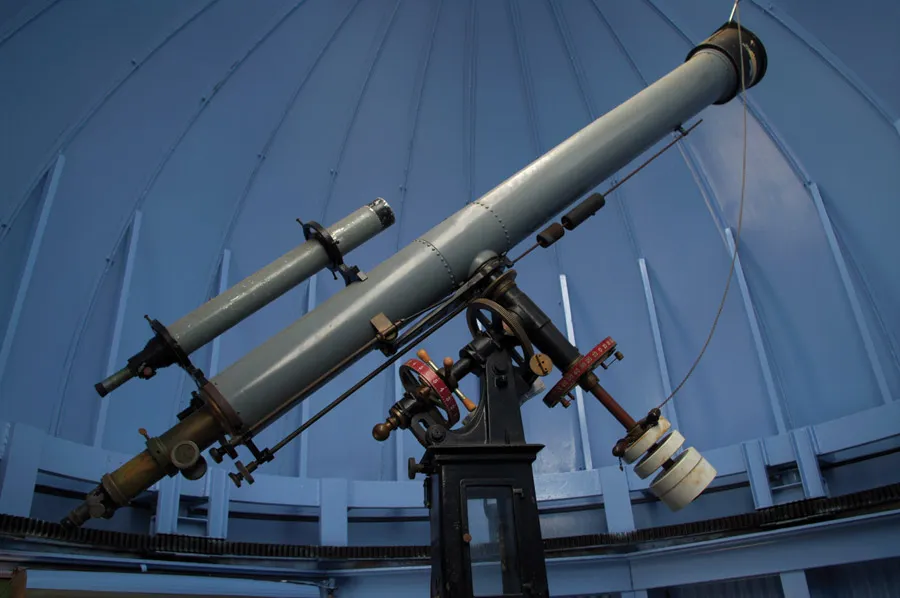
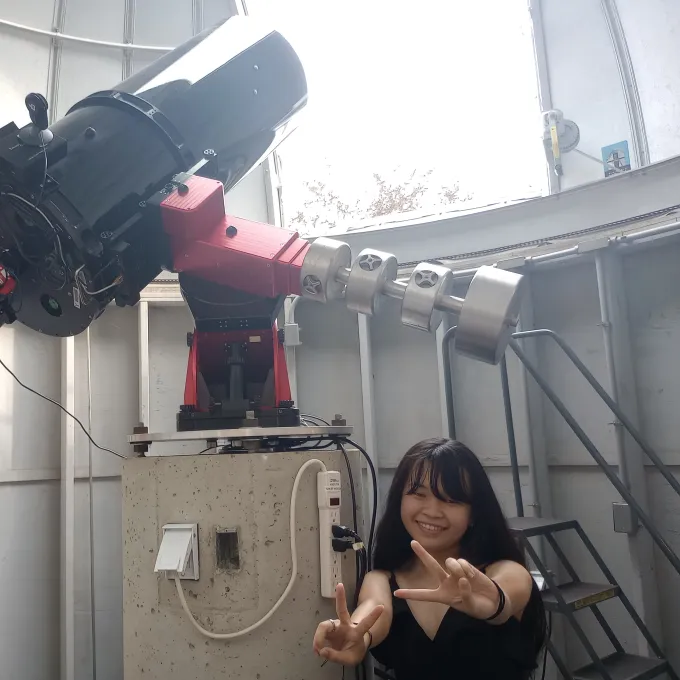
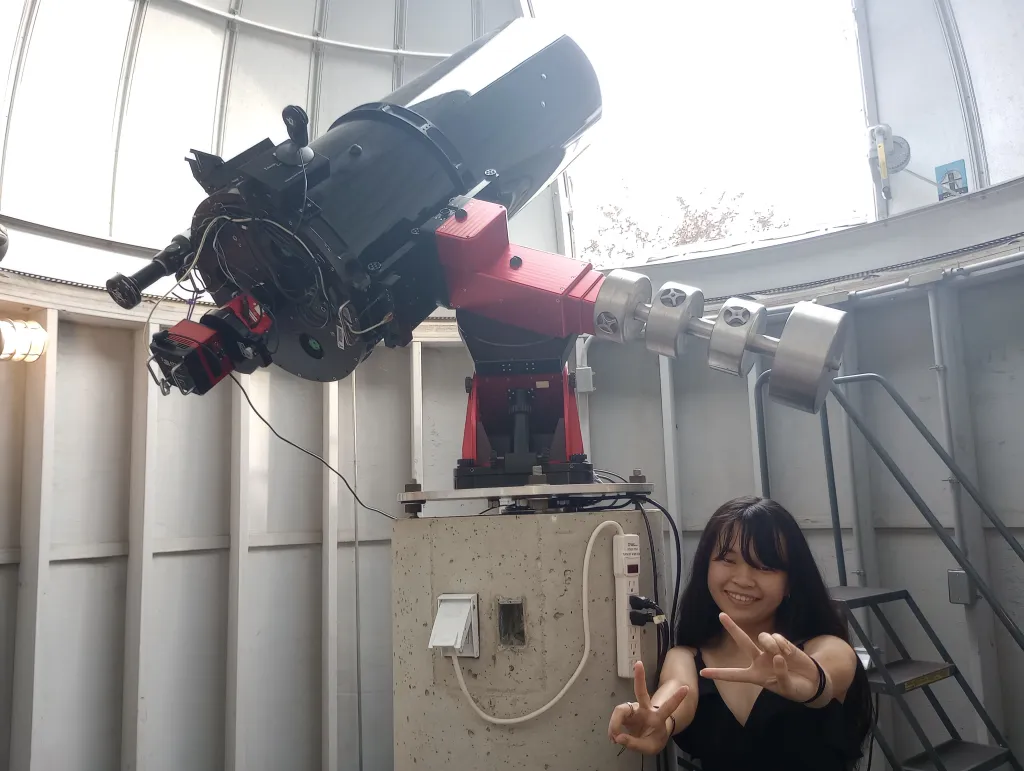
At the inaugural ceremonies of Washington University in 1857, William Greenleaf Eliot, the first chancellor, announced that the local philanthropist, James Yeatman had donated $1,500 for the making of a superior telescope. The lenses for the 6-inch refractor, made by Henry Fitz & Co., and refigured in 1882 by Alvan Clark & Sons, are still in use today.
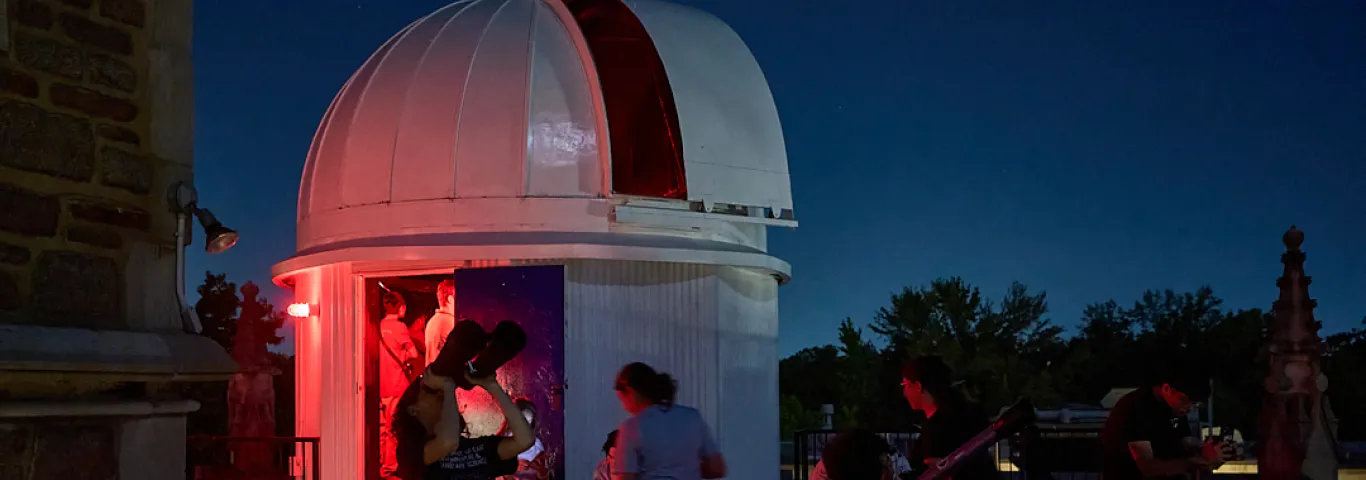
During the latter part of the 19th century, the Observatory, at that time located at 18th and St. Charles Streets in downtown St. Louis, served as a source of standard time for the region. A network of some 50,000 miles of telegraph wire existed. Henry W. Pritchett and other Observatory astronomers made several valuable determinations of longitude. In 1905, as the University moved to the present location from downtown, the Observatory moved to the site where Louderman Hall now stands. In 1954, the present dome atop Crow Hall was completed.
The present observatory was constructed in 1954. Prior to its installation, the 6-inch telescope was thoroughly refurbished, and the objective was cleaned and checked at the Yerkes Observatory, under the supervision of A.B. Meinel, through the assistance of Gerald Kuiper. In January 2000, master telescope and clock craftsman Jon Slaton carried out a substanial clean-up and adjustment of the telescope mount and pointing mechanism.
The present electric drive for the telescope was installed in the mid-1960s, replacing the original pendulum drive.
The Yeatman refractor has an apeture of 15 cm (6 inches) and a focal length of 2.44 m (96 inches). The historic telescope, although small by present-day standards, is of excellent quality and is used to show some of the splendors of the sky to many visitors.
Objects Visible at Various Times
The Moon presents mountain ranges, plains, and countless craters. Best viewing is near first quarter when there is deep shadowing. Near full moon, little contrast exists to bring out fine details. The planets Venus, Mars, Jupiter, and Saturn are clearly visible at various times of the year. Most objects located far beyond our solar system, or "deep-sky objects", need a clear, dark night to be seen well. On such nights, the Pleiades, or Seven Sisters star cluster, the Orion nebula, a gaseous region of star formation, and other objects can be viewed, but the atmosphere over St. Louis, as with most major cities, is not clear enough for viewing very faint or diffuse objects.