
2026 Robert M. Walker Distinguished Lectures Colloquium: Meteorites and the Origin of the Earth and Moon
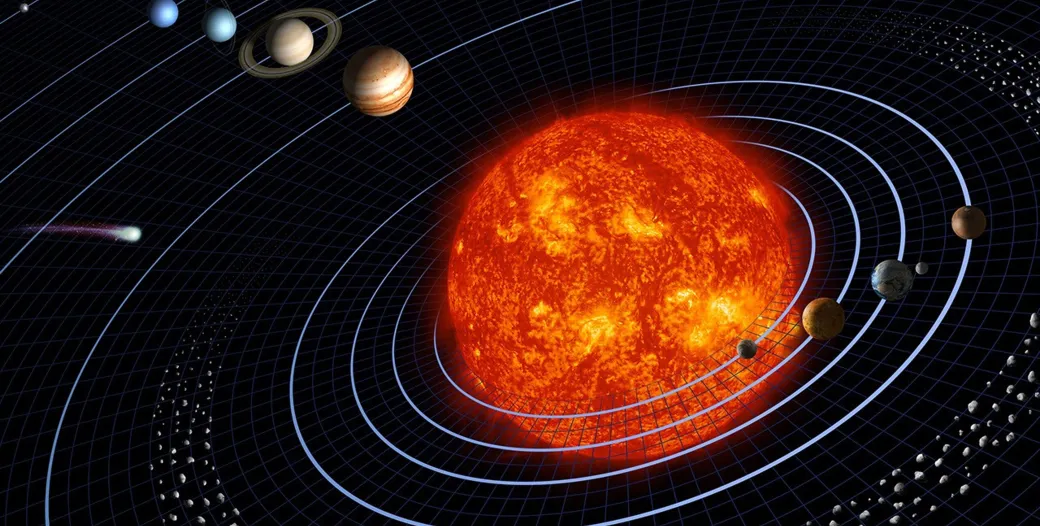
The Earth formed from a swirling disk of gas and dust orbiting the young Sun. But how was this dust converted into planets? Did the Earth form from local material or from dust originating in the far outer regions of the solar system? And was this material accreted as actual dust, or was it incorporated into larger bodies that later collided to form the Earth? The answers to these questions are locked in meteorites, left-over fragments from the earliest stages of planet formation. I will show how we can use small variations in the isotopic composition of meteorites to identify the nature and origin of the material that built the Earth, and how this helps us understand the dynamical processes by which the Earth formed. I will conclude with discussing the origin of the Moon, which formed by a giant end near the end of Earth’s accretion, and will offer an explanation for why the Earth and Moon are isotopic twins.

Thorsten Kleine is Director and Scientific Member of the Max Planck Institute for Solar System Research, where he leads research into the origin and evolution of the Solar System. A cosmochemist and meteorite researcher, his work uses high-precision isotope analyses of meteorites and planetary materials to investigate how planets, asteroids, and moons formed more than 4.5 billion years ago. Previously a professor at the University of Münster and a researcher at ETH Zürich, Kleine is internationally recognized for his contributions to planetary science and the study of early Solar System history. He is the recipient of numerous honors, including the F. W. Clarke Medal, the Nier Prize, and the Victor Moritz Goldschmidt Award.