
Edwin Thompson Jaynes Fellowship Symposium
Every Fall Semester, the Department of Physics hosts the Jaynes Fellowship Symposium. This engaging event highlights the incredible work being done by our Edwin Thompson Jaynes postdoctoral fellows.
This year, we're excited to hear from Christopher Cappiello, Dmitry Chichinadze, and Xuanying Lai who will each deliver ~25 minute talks on their research.
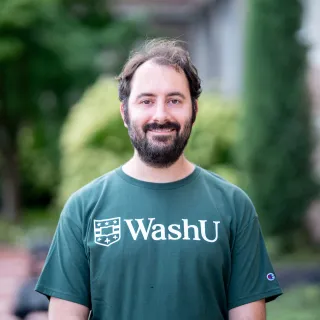
Chris Cappiello | Distinguishing Particle Dark Matter from Primordial Black Holes with MeV Gamma-Ray Telescopes
Primordial black holes (PBHs) within the asteroid mass window remain a viable dark matter candidate. A new generation of gamma-ray telescopes aimed at probing the relatively less constrained MeV photon gap will be able to probe Hawking radiation from PBHs on the lower side of the asteroid mass window, as well as MeV-scale particle dark matter. In the presence of such a signal, it would be important to distinguish such signals not just from astrophysical backgrounds, but also from one another. In this work we show how well PBH and particle dark matter can be differentiated from one another with the projected sensitivity of galactic center observations by upcoming telescopes such as the planned AMEGO-X instrument. We find that, with only 10^6 s of observing time, benchmark models of decaying scalar or vector dark matter could already begin to be distinguished from PBH signatures.
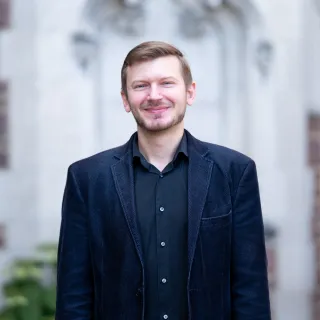
Dmitry Chichinadze | Nonreciprocal electron transport in metals and superconductors
Nonreciprocal electron transport is manifested as a directional dependence of a system’s response to an external electric field. A classic example of such behavior is the diode effect, where electrical resistance is very high for one current direction and very low for the opposite. Its superconducting counterpart is the superconducting diode effect. In this talk, I will present an overview of my recent work on giant second-order nonlinear conductivity in 2D metals, the superconducting diode, and the superconducting memory effect. Specifically, I will highlight the roles of dimensionality, substrates, external perturbations, and non-equilibrium effects.
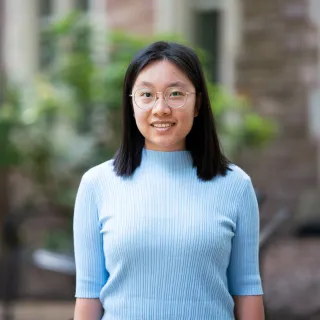
Xuanying Lai | AI Scientist Discovered Robust Decoupling Sequence for Quantum Sensing
Protecting quantum coherence against disorder, interactions, and imperfect control remains a major challenge for quantum technologies, particularly in multi-level systems. In this talk, I will present QORA, a multi-agent AI framework that combines theoretical reasoning with autonomous experimental control to discover robust dynamical decoupling sequences. Using a dense ensemble of spin-1 nitrogen-vacancy centers in diamond, QORA identifies a family of sequences, termed AID-ROD, that nearly doubles the measured coherence time compared with the state-of-the-art DROID-C3PO sequence. The improvement remains robust across a range of pulse spacings and microwave driving amplitudes. Beyond the experimental performance, we investigate the physical mechanisms underlying these AI-discovered sequences. Our analysis reveals that error suppression occurs at different levels of the sequence structure: individual pulse blocks mitigate onsite disorder and control imperfections, while their organization over longer timescales suppresses spin interactions. This connection between autonomous discovery and physical understanding highlights the potential of AI-driven experimentation not only to improve quantum control, but also to uncover design principles for complex quantum systems.