
Planetary Thermal Emission in the Age of Roman: St. Louis Astronomical Society July Meeting
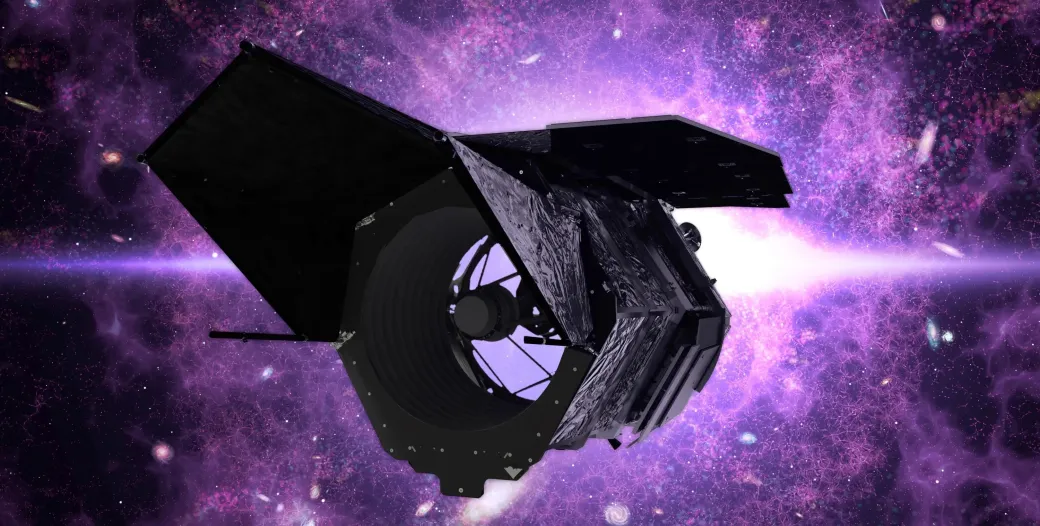
Measuring the dayside thermal emission of rocky exoplanets provides essential insights into their compositions and the presence of atmospheres. Recent James Webb Space Telescope observations have identified a puzzling pattern. Some rocky exoplanets orbiting small cool red stars have dayside temperatures higher than the theoretical maximum, assuming that the star is the sole energy source. This implies the presence of additional internal heat sources. In a recent research paper, Dr. Lin simulated three possible internal heating mechanisms - residual heating from the planet’s formation, tidal heating, and induction heating from interactions with the stellar magnetic field. He found that these mechanisms, even in combination, cannot explain the observed thermal emission excesses. The observed excess heat is more likely caused by other processes not considered in his study. NASA’s Nancy Grace Roman Space Telescope, to be launched in September 2026, will provide additional data to refine the simulations. Dr. Lin will also discuss the prospect of using the Roman telescope to detect transiting and non-transiting exoplanets orbiting white dwarf stars.
Dr. Zifan Lin is a postdoctoral researcher in the Physics Department and the McDonnell Center for the Space Sciences at Washington University. He has broad research interests in planetary science. He studies planetary interiors, exoplanet atmospheres, photochemistry, biosignatures, and transmission spectroscopy.
The St. Louis Astronomical Society is an organization for individuals interested in astronomy and telescopes. The public is invited to attend its meetings, telescope observing sessions, and special events. For more information about Astronomical Society events, please visit www.slasonline.org.
Free parking will be available.
Header image: Halley's comet (Credit: NASA Jet Propulsion Laboratory, California Institute of Technology)