
A new study by graduate student Nathan Whitsett and assistant professor Tansu Daylan, both affiliated with the Department of Physics and the McDonnell Center for the Space Sciences, has identified several candidate systems for magnetic interactions between exoplanets and their host stars. The work advances a new avenue toward measuring planetary magnetic fields, a long-standing challenge in exoplanet science with important implications for planetary interiors, atmospheric evolution, and potentially habitability.
The study, Planet-induced Stellar Flare Candidates from the TESS Mission, was published in The Astrophysical Journal. Following its publication, the paper was featured in an AAS Journal Author Series episode featuring Whitsett and Daylan on YouTube.

“Magnetic fields shape planetary environments by protecting atmospheres from stellar winds and regulating interactions with energetic particles, yet exoplanetary magnetic fields are extremely difficult to measure,” Daylan said. “One promising probe is magnetic star–planet interaction: a strongly magnetized planet orbiting close to its host star may trigger magnetic reconnection and stellar flares at preferred orbital phases. Detecting such phase-correlated flares could therefore provide an indirect measurement of the planet’s magnetic field.”
To search for these elusive signatures, Whitsett and Daylan developed ardor, a new analysis pipeline that detects and characterizes stellar flares in photometric observations while taking into account the expected geometry of magnetic star–planet interactions. They used ardor to search for stellar flares in time-series observations from NASA’s Transiting Exoplanet Survey Satellite (TESS). They also performed injection-recovery simulations to measure the sensitivity of their search and determine whether apparent orbital correlations could arise from random stellar activity.
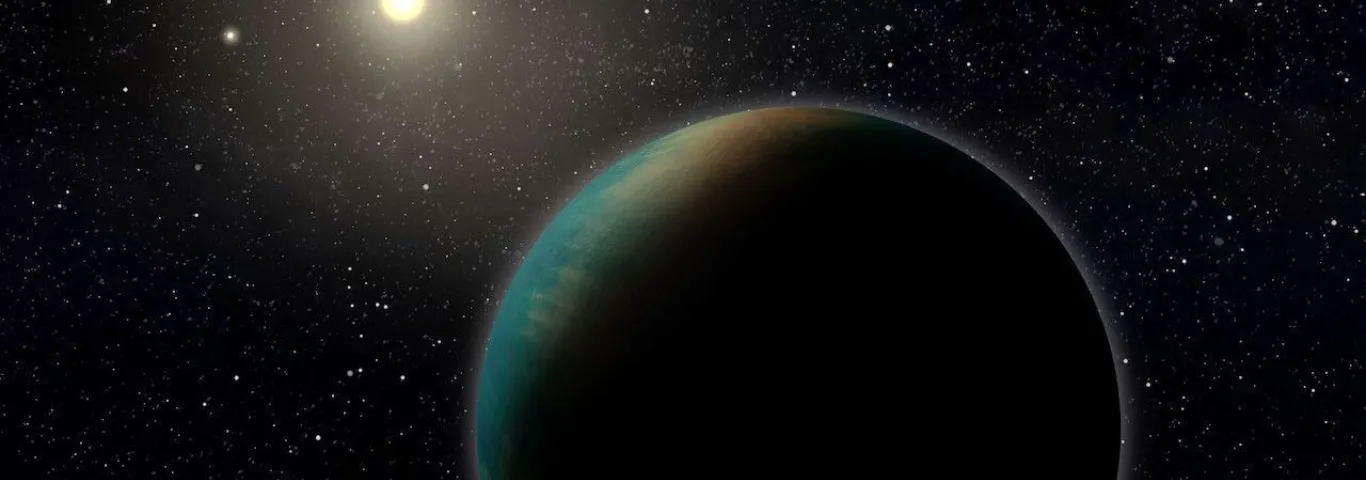
The search identified several candidate systems, with TOI-1062 b and Gliese 49 b standing out because of the timing of their stellar flares. TOI-1062 is a relatively quiet, Sun-like star, while Gliese 49 is a young, magnetically active red dwarf about half the size of the Sun. Their planets are also quite different: TOI-1062 b is a super-Earth a little more than twice the size of Earth, while Gliese 49 b is a sub-Neptune with about six times Earth’s mass. Both planets orbit very close to their host stars on highly eccentric paths, conditions that may enhance magnetic interactions when the planets are closest to their stars.

“TOI-1062 and Gliese 49 are very different stars,” Whitsett said. “In our analysis of TOI-1062’s data, we only identified six flares over hundreds of days of observations. However, all six flares were nearly identically timed with the closest approach of the innermost planet, TOI-1062 b, suggesting the planet plays a role in triggering these flares.”
Gliese 49 is a young, magnetically active red dwarf that produces dozens of high-energy flares. Although the flares observed in the system were not as strongly clustered around Gliese-49’s orbit, Whitsett said the star’s high level of activity likely produces many flares independently of the planet.
“Both of these orbital distances are so close to their host stars that the planets can ‘magnetically talk’ with them,” Whitsett said. “The eccentricity is also important because it serves as an internal ‘on-off’ switch. Because magnetic field strength drops off rapidly with distance, the flare-triggering signal will be much stronger when the planet is closest to the star and weakest when it is farthest away.”
Additional observations will be needed to establish whether the observed flare patterns are truly magnetic in origin. Nevertheless, the results demonstrate how large time-domain photometric surveys such as TESS can systematically search for star–planet magnetic interactions and identify systems that merit detailed follow-up.
“The magnetic fields of exoplanets remain one of the least explored properties of planetary systems,” Daylan said. “If confirmed, these systems would provide valuable laboratories for understanding how planets interact with their host stars and how planetary magnetic fields influence long-term atmospheric evolution.”